
When someone experiences emotional turbulence, especially during difficult or potentially traumatic times, our response can significantly influence not only their emotional state but also their perception of us. This response may either calm or further agitate them, shaping the long-term dynamics of our relationship.
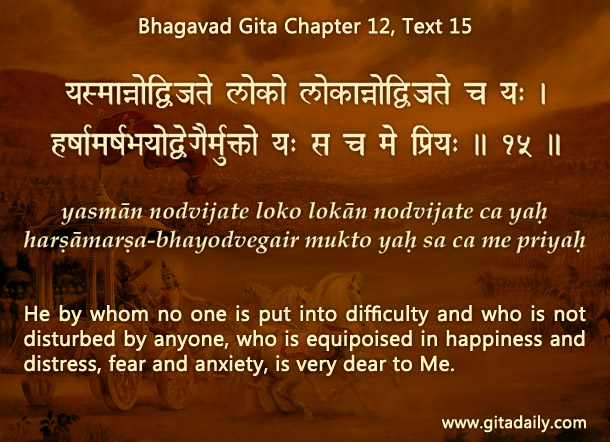
The Bhagavad Gita (12.15) advises us to be positive influences, particularly during others’ emotionally turbulent times. It urges us to strive not to be disturbed by others’ emotional states while ensuring we don’t disturb them further through our reactions. This dual responsibility emphasizes both inner composure and outer sensitivity.
Responding with equanimity
Equanimity refers to emotional steadiness and calmness. When someone is overwhelmed by anxiety or breaking down in tears, we can best serve them by staying composed and steady. For example, a friend struggling with fear or uncertainty may benefit from our calm presence, which can reassure them and provide stability.
Responding with empathy
However, equanimity may not always be the most suitable response. For instance, if someone is angry due to mistreatment and seeks validation for their emotions, an emotionally detached response might exacerbate their frustration. In such cases, empathy becomes essential. Empathy doesn’t necessarily mean sharing the same emotions, such as anger, but rather demonstrating that we understand their feelings and are emotionally present with them.
Empathy involves expressing understanding and support through words, tone, and gestures, showing that we stand with them in their struggles. This capacity to discern and provide the most supportive emotional response is the essence of emotional intelligence.
Summary:
- Emotional intelligence involves knowing when to respond with equanimity to provide calmness and when to respond with empathy to offer emotional validation.
- Equanimity is helpful when calming emotions like anxiety, while empathy is more suitable for addressing emotions like indignation.
- By balancing equanimity and empathy, we can navigate emotionally charged situations constructively, strengthening relationships and offering meaningful support.
Think it over:
- What are the two key ways the Bhagavad Gita guides us to support others in emotional distress?
- Reflect on a situation when someone’s response to your emotional state agitated you rather than calming you. What can you learn from that experience?
- Recall an incident where someone helped you navigate emotional challenges effectively. How can you apply their approach to enhance your emotional intelligence?
***
12.15 He by whom no one is put into difficulty and who is not disturbed by anyone, who is equipoised in happiness and distress, fear and anxiety, is very dear to Me.
emotional intelligence develops with JAPA.
So very well written
Thank you for this brilliant resource!