
The power of speaking is an integral part of our lives. To use this power constructively and not destructively, we can ask ourselves three questions centered on the source, intent, and mode of our speech. These dimensions are encapsulated in the acronym SIM and find resonance in the Bhagavad Gita 17.15, which provides timeless guidelines for disciplining our speech.
Source: What am I speaking?
The content of our speech begins with its source. We need to evaluate whether what we are speaking is truthful and reflective of reality. This evaluation involves examining whether our words are based on a reliable and verifiable source of information. Before speaking, we can ask:
Is what I am saying factual and accurate to the best of my knowledge?
Am I representing the situation as it is, without exaggeration or distortion?
Speaking truthfully is vital, as it ensures our words align with reality and lay a strong foundation for effective communication.
Intent: Why am I speaking?
The intent behind our speech reflects our inner motivation. After ensuring that our content is truthful, we can turn inward and examine the reasons for our words. We can ask:
Is my motive constructive? Am I seeking to help, inform, or inspire others?
Or is my intent selfish, aimed at furthering a personal agenda, boosting my ego, or hurting someone?
The Bhagavad Gita emphasizes speaking with hitam (beneficial intent), urging us to ensure our speech is aligned with positive and noble objectives. By focusing on intent, we can speak with greater responsibility and integrity.
Mode: How am I speaking?
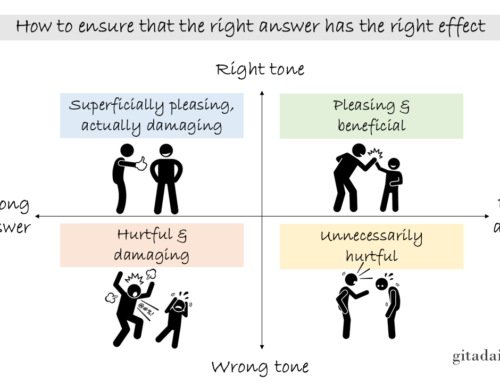
Even if the content of our speech is truthful and our intent noble, the mode of delivery significantly impacts its effectiveness. The tone, demeanor, and manner of speaking can determine how our words are received. We can ask:
Is my tone pleasing, even when I need to speak uncomfortable truths?
Am I minimizing agitation and maximizing clarity and receptivity?
The Bhagavad Gita highlights the importance of being priyam (pleasing) and anudvega-karam (non-agitating) in our speech. This means we should strive to deliver our words in a way that reduces unnecessary friction while conveying their essence effectively.
Summary:
- Source: Ensure the content of your speech is truthful and based on reliable information. Avoid speaking without verifying the accuracy of your words.
- Intent: Reflect on your motivation for speaking. Aim to help, inspire, or inform others, rather than pursuing personal gain or causing harm.
- Mode: Speak in a way that is at best pleasing and at least non-agitating. Deliver your message thoughtfully to foster understanding and minimize conflict.
Think it over:
- Reflect on a time when you shared something that turned out to be untruthful. How can you better evaluate the source of your information before speaking?
- Consider a moment when your intent behind speaking was less than noble. What steps can you take to evaluate and elevate your motivation before speaking in the future?
- Recall an instance where the mode of your delivery obstructed others from understanding your message. What can you do to soften your tone and make your speech more constructive?
***
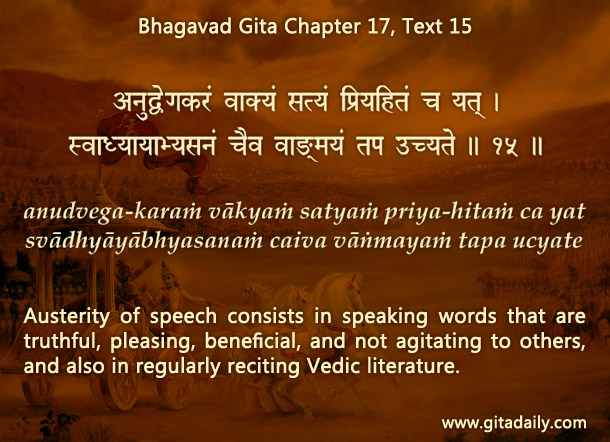
17.15 Austerity of speech consists in speaking words that are truthful, pleasing, beneficial, and not agitating to others, and also in regularly reciting Vedic literature.
Leave A Comment