
Engage the mind or it will engage and enrage and encage us.
Our mind is constantly active, always looking for something interesting or pleasurable. Restless by nature, it gravitates towards whatever seems like the easiest path to quick relief or pleasure. This tendency makes it essential for us to consciously engage our mind in constructive activities.
Constructive engagement of the mind
Constructive engagement doesn’t mean we need to always be doing something demanding or exhausting. The Bhagavad Gita emphasizes regulation in all our activities, including recreation. However, if we aren’t mindful, even recreational activities can become pathways to distraction or degradation.
When the mind is left unchecked, it often drags us into unproductive or even harmful activities, all in the name of seeking quick gratification. Without vigilance, we might find ourselves wasting significant time on trivial pursuits. This unintentional diversion by the mind often triggers anger and frustration within us, leading to a destructive cycle.
The mind’s dual traps: Desire and anger
When the mind distracts us, it starts with desire, steering us toward quick relief or pleasure. If we succumb, we may later feel regretful. Instead of focusing on course correction, the mind can enrage us, leading to self-condemnation: “Why did I waste so much time? Why am I so foolish?” While occasional self-criticism can be constructive, excessive self-blame only keeps us stuck, draining us further.
This self-directed anger becomes the mind’s second weapon, keeping us trapped in a cycle of guilt and frustration. The impressions left by succumbing to desire and the anger that follows deepen over time, making it harder to break free from this vicious cycle.
Breaking free: Conscious engagement
The key to overcoming these traps is conscious engagement of the mind. When we realize we’ve been distracted, the first step is to regain focus and get back on track. Once we’re composed, we can reflect on the triggers and patterns that led to the distraction. This approach mirrors what we’d do if we slipped while walking: first, get up and steady ourselves; then analyze what caused the fall to prevent a recurrence.
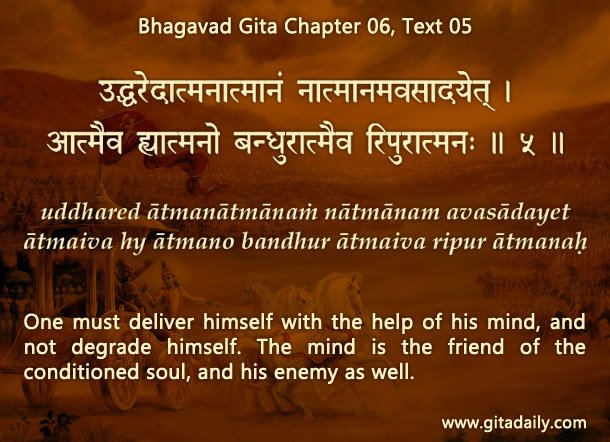
If we allow ourselves to be consumed by frustration or anger, we only strengthen the mind’s hold over us. Instead, we need to consciously direct our attention toward constructive activities. The Bhagavad Gita (6.5) advises us to engage the mind in ways that elevate it rather than degrade it.
Summary:
- The restless mind naturally seeks quick relief or pleasure, often leading us to unproductive or harmful activities.
- If unchecked, the mind uses desire to distract us and anger to keep us trapped in a cycle of guilt and frustration.
- To break free, we must consciously engage the mind in constructive activities, staying alert to its tricks and learning from our distractions to prevent future relapses.
Think it over:
- Recollect a time when the mind distracted you into doing something unproductive or harmful. How did it lead you there?
- Reflect on how the mind induced anger or frustration in you after a distraction. How can you resist this second trap in the future?
- Identify areas where you are often disengaged and plan specific ways to consciously engage yourself constructively.
***
06.05 One must deliver himself with the help of his mind, and not degrade himself. The mind is the friend of the conditioned soul, and his enemy as well.
Leave A Comment