
Simplicity is often lauded as a virtue in spiritual traditions worldwide. Yet, simplicity is sometimes conflated with naivety, leading people to become uncritical, gullible, and manipulable by those with self-serving intentions. The key difference between being simple and being naive lies in the faculty being addressed: simplicity pertains more to the heart, whereas naivety pertains to the head.
A simple person is not duplicitous; their heart’s intentions are pure, and their actions align with these intentions to the extent possible for finite, fallible human beings. Simple individuals recognize what is essential in life and hold on to it, valuing the spiritual over the material and prioritizing God, the Lord of the world, above the world itself. Such simplicity provides clarity of priorities, even when life’s specifics are complicated or unclear.
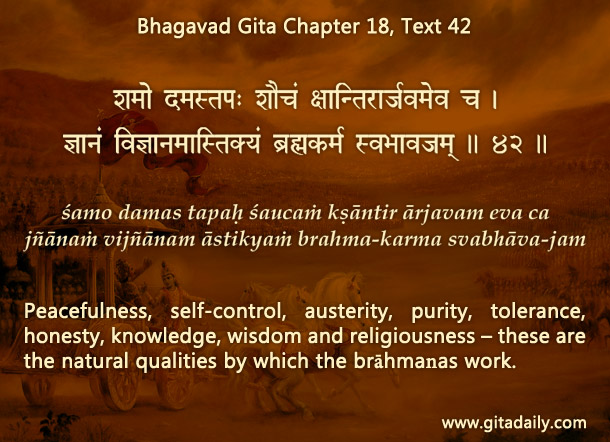
Simplicity enables one to focus on essentials while letting go of excessive material attachments. The Bhagavad Gita (18.42), while describing the characteristics of a Brahmana, mentions arjavam—straightforwardness or simplicity—as a virtue, followed by knowledge and wisdom. This sequence underscores that simplicity does not mean being a simpleton or viewing the world in simplistic terms. Instead, simple people cultivate knowledge, allowing it to mature into realized wisdom. Far from being intellectually limited, simplicity harmonizes with deep thinking and discernment.
Naivety, on the other hand, is characterized by an inability to see beyond the surface of things. Naive individuals are easily deceived by flowery words, sweet talk, or grandiose actions, even if these lack substance. Their lack of discernment makes them vulnerable to manipulation, unable to detect the intentions behind words or actions.
Paradoxically, while simple people are clear about their own intentions and free of duplicity, they do not naively assume that everyone shares their disposition. They understand that the world includes people across the moral spectrum, from virtuous to malicious. This awareness makes them cautious about whom they trust and whose words they take seriously.
Simplicity helps us grow spiritually and draws us closer to God by removing unnecessary distractions. Naivety, however, can obstruct our spiritual progress by exposing us to exploitation by self-serving individuals, including those who misuse religion to exploit others’ faith.
Summary:
The key difference between being simple and being naive lies in clarity and discernment. Simple people have a pure heart and focus on what is essential, aligning their internal values with their external actions. In contrast, naive individuals lack the critical faculties needed to discern people’s intentions beyond their words or actions. Simplicity removes distractions on the path to God, while naivety creates avoidable pitfalls.
Think it over:
- Recollect an occasion when you encountered someone with deep simplicity and reflect on how it touched your heart.
- Recollect an incident when you encountered someone who was naive and exploited by others. Reflect on how that incident shaped or reshaped your view of the world and human nature.
- List two steps you can take to distinguish between being simple and being naive, so you can practice humility and discernment simultaneously.
***
18.42 Peacefulness, self-control, austerity, purity, tolerance, honesty, knowledge, wisdom and religiousness – these are the natural qualities by which the brāhmaṇas work.
Simplicity is termed as Simpleton