
A Diwali Deep Dive – Significance of the Six Festivals
Diwali is not just a festival of lights; it’s a festival of insights. Each day in this sacred season carries its own spiritual message—guiding us from outer celebration to inner illumination.
Below are six reflections, one for each of Diwali’s sacred days, inviting us to rediscover how every light outside can awaken the divine light within.
Naraka Chaturdashi Special — During the Dawn, Darkness Goes Down
Before the night of lights we call Diwali comes the dawn of delight—when divine light triumphed over demoniac might.
Naraka Chaturdashi marks the dawn when Krishna ended Narakasura’s reign and freed sixteen thousand captive princesses. That morning, we bathe before sunrise and light lamps early—a reminder that this day celebrates the mighty victory of light over darkness.
Bathing is meant to clean dirt, not just from our body but also from our heart. By remembering the Lord while bathing, we pray to wash away demonic desires and free the divine longings within—so they may unite us with our Lord, just as the devoted princesses did after the fall of Naraka.
On this sacred dawn, let us pray that the supreme light of divine love illuminate and elevate our heart toward our Lord—to seek, see, and savor the One who is our eternal home.
A Lamp for the Ayodhya Inside You
Diwali celebrates Lord Rama’s victorious return to Ayodhya. That event is historical—but it can also be personal.
Ayodhya isn’t just a place on the map; it’s also the space within us that feels bereft of the Lord’s presence—not because he is absent, but because we are forgetful.
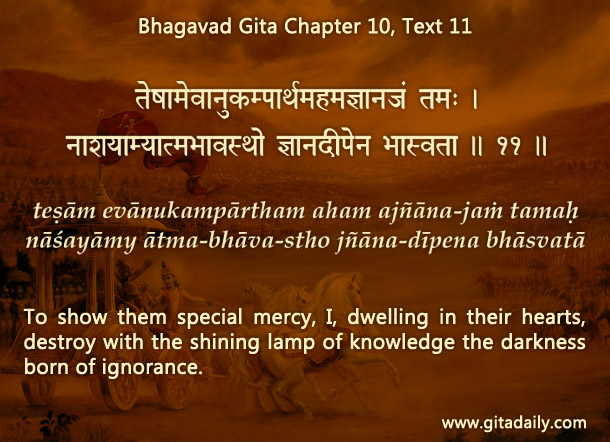
As we light lamps around our homes, let’s also light a lamp within our hearts—the lamp of devotion. Even if our devotion is small, he can make it shine bright. The Bhagavad Gita (10.11) assures that he removes the darkness within for those who seek his light.
So this Diwali, let’s not just clean houses—let’s cleanse hearts. Let’s not just burst crackers—let’s burst the ego. Let’s welcome guests, yes—but more importantly, let’s welcome God.
When the outer lamps remind us of the light of our Lord’s love, then while we celebrate Rama’s homecoming to Ayodhya, we’ll also celebrate our own homecoming—to the Lord who’s always waiting in the temple of our heart.
Lakshmi Puja Reflection — From Riches to Enrichment
Lakshmi Puja is the day we prepare our homes to welcome the Goddess of Fortune. Yet the blessing she most wishes to give us is not the wealth that fills our homes, but the wealth that fulfills our hearts.
So many in this world are wealthy yet unhappy. Their unhappiness is not because of wealth itself, but because wealth has displaced, from the center of their heart, the true source of happiness: the Lord of the Goddess of Fortune.
As long as that inner displacement remains, no amount of outer attainment can fill the void. When we cultivate devotion, we restore our heart’s alignment with the Lord, and therein find the enrichment that endures.
As we perform Lakshmi Puja, let us not focus merely on the prosperity that graces our homes, but on the devotion that awakens in our hearts—for that is the richest blessing the Goddess of Fortune can bestow.
Bali Pratipadā Reflection — The Wonder of Surrender
When the Lord appeared as Vāmana and asked Bali for just three steps of land, Bali agreed—and lost everything. Yet wonder of wonders: he responded to this seeming deception with unswerving devotion.
How could he do that? Because his surrender sprang not from helplessness but from faithfulness. He was sure that the Lord was his well-wisher and he waited for the Lord’s plan to manifest. And it did—he not only regained a flourishing kingdom but, far more importantly, he gained the Lord’s perennial proximity: the Lord became his doorkeeper and protector.
In moments when our gains seem to have turned into losses, let us open our hearts to the wonder of surrender. Then we too will discover the sweet truth: the greatest fulfillment lies not in gaining everything in this world, but in giving everything to our Lord.
Govardhan Puja Reflection — The Courage to Say No to the Ego
On this day, Krishna urged the residents of Vrindavan to worship Govardhan instead of Indra. Enraged, Indra unleashed storms to destroy the Vrajavasis.
This Indra-mentality—the ego—resides within us all. As long as we keep worshiping it, feeding it whatever it demands, we can’t align with our Lord. The ego starves our virtue, our devotion, indeed our entire nobler side.
Let us learn from the Vrajavasis—may our devotional side gain the courage to stop appeasing our ego. Though it may retaliate, Krishna will protect us from its bullying. And in protecting, he may use the unlikeliest of instruments—like Govardhan Hill itself.
When we feel the pain of our ego being refused and rejected, let us never become hopeless but always remain faithful—waiting to see how Krishna protects us, in his own inimitable and intimate way.
When we say no to appeasement and yes to alignment, our heart will relish the supreme enrichment.
Bhai Dooj Reflection — The Sanctity of Bonds
On this day, Yama, the god of death, visits his sister Yamuna. She welcomes him with love, and he blesses all who honor their sacred bonds.
Bhai Dooj celebrates the bond between brother and sister—but its message goes much deeper. It is about the sanctity of bonds—about how relationships are meant to refine our love, not restrict it.
This festival reminds us that we belong to something greater than ourselves. That belonging begins with family, expands to community, to country, to humanity, and ultimately to divinity.
Bhakti isn’t about rejecting these human bonds—it’s about recognizing their purpose. Every bond that gives us a sense of belonging is meant to raise our awareness toward the ultimate bond—the bond with the divine, the only one that endures and fulfills.
So as we mark Bhai dooj, sharing sweets and affection, let’s cherish our immediate bonds while deepening our ultimate bond—for when divine love prevails, even death as Yama bows in reverence.
Conclusion
These six days of Diwali aren’t merely about ritual—they’re about revival: reviving light over darkness, devotion over distraction, and surrender over self-centeredness.
May the lamp we light this Diwali not only brighten our homes, but also awaken the light of devotion in our hearts.
***
10.11 To show them special mercy, I, dwelling in their hearts, destroy with the shining lamp of knowledge the darkness born of ignorance.
Festivals always boost economy.