
Treating our mind like an inherited property
Treat our mind like an inherited property that we can’t sell: take what is usable and stay away from what is not.
Suppose we inherit some property from a distant, unrelated relative. Further suppose that this inheritance is a mixed bag—there are some valuable assets, but also many worthless or even burdensome items requiring taxes and maintenance. Imagine, too, that this inheritance comes with a binding stipulation: we cannot sell the property and be done with it; we must live with it and in it.
Such an inheritance, though rare in real life, is a fitting metaphor for the mind we inherit. Our mind is a mixed bag, filled with memories, tendencies, desires, and hurts. It is the psychological home within which we, as souls, must live. While we cannot change or discard the mind we’ve inherited, we can make the best of it.
The mind: A complex inheritance
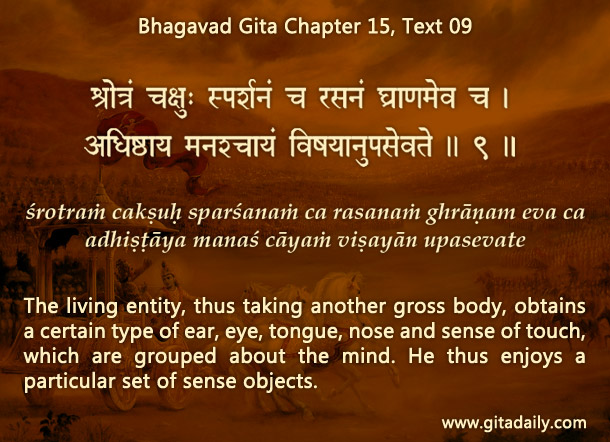
The mind is like a house with numerous underground chambers and hidden rooms. Some contain treasures, but most may hold disturbances or even dangers. We inherit this mind from our past lives, as the Bhagavad Gita (15.9) explains. Yet, we rarely spend time investigating its contents; instead, we identify with it, adopting its desires and hurts as our own.
When guided by the wisdom of the Bhagavad Gita, which serves as an inner flashlight, we can begin to see ourselves as distinct from our mind. While the mind is an inseparable part of us, it is just a part. Its scars and treasures are fossils of our past, preserved as impressions. Observing these impressions objectively helps us face our mind without being overwhelmed by it.
Dealing with mental baggage
Within the baggage of our mind, we can pick out whatever is favorable and helpful. For unfavorable aspects, we can find appropriate ways to deal with them or at least distance ourselves. By doing so, we avoid being hijacked by past impulses that conflict with our present purposes.
While we must live with our inherited psychological house, we can change its contents. By cultivating meaningful experiences, cherishing positive memories, and pursuing healthier desires, we can let better elements take residence within us. Letting go of past hurts through healing mechanisms decreases their adhesive power on our psyche, allowing us to release them.
Renewing our mind
The most powerful way to create meaningful memories is by engaging in service to our Lord, using whatever is usable from our inherited mind in that service. Through such engagement and the resulting purification, our consciousness can be redirected toward the divine. Although the mind will remain the same structurally, it will be transformed by what it contains. Like a renovated house, it will be completely different internally.
Summary:
Our mind is like an inheritance from our past that we must live with and live in. By exploring its visible and hidden spaces, we can understand our mental baggage and decide what to use and what to avoid. Through meaningful activities that create impactful memories, we can renew our mind, changing its contents and transforming ourselves internally.
Think it over:
- List two ways in which your mind is similar to and different from a typical inheritance.
- List three positives and negatives that have come as part of your mental inheritance.
- Identify three meaningful activities you can do to create fresher and brighter memories, aiding in the renewal of your mind.
***
15.09 The living entity, thus taking another gross body, obtains a certain type of ear, eye, tongue, nose and sense of touch, which are grouped about the mind. He thus enjoys a particular set of sense objects.
No mind .no body