
What the uninformed downplay as opinions, the informed celebrate as taste.
We live in a world full of relativity—relativity in opinions, preferences, and perceptions. For instance, different people enjoy different kinds of food, art, or entertainment. This diversity in likings reflects individuality and can often be dismissed as mere differences of opinion. However, not all differences are just opinions; some arise from the development of taste, a faculty cultivated through refinement and experience.
The difference between opinion and taste
While it is natural to have personal preferences, the degree of depth in our experience often depends on the level of refinement of our faculties. For example, anyone can have a casual opinion about food, art, or music. Yet, a connoisseur—someone who has developed a finer sense of discernment—can perceive subtle differences in flavors, textures, or aesthetic qualities that others might miss.
Taste, therefore, is not simply about arbitrary preferences but about a heightened capacity to appreciate and experience reality at a deeper level. A trained eye can see nuances in art that an untrained one cannot; a cultivated palate can distinguish between layers of flavors that a casual eater may overlook. To dismiss the discernment of an expert as just another opinion is to miss an entire dimension of reality.
Spirituality and the development of taste
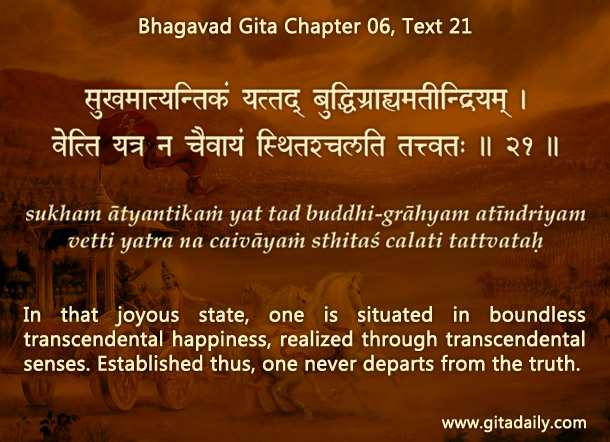
Just as artistic or culinary faculties can be cultivated, so can our spiritual faculty. Through disciplined practices like yoga and meditation, the Bhagavad Gita (6.21) describes how one can experience “trans-sensory happiness,” a joy that transcends sensory pleasures. This isn’t about perceiving the same reality from a different angle but about accessing an entirely new dimension of reality—one that is profound, unending, and enriching.
For the uninformed, spiritual happiness might seem like just another opinion—on par with enjoying a movie or a meal. But for those who have cultivated spiritual taste, it is not simply a preference; it is a deeper experience of a higher reality. Equating sensory gratification with spiritual fulfillment shows a misunderstanding of the qualitative difference between the two.
Why not dismiss spirituality as mere opinion?
When we dismiss spirituality as just another relative preference, we risk trivializing an entire domain of reality that could profoundly enrich our lives. Spirituality doesn’t merely offer a different kind of happiness; it provides a higher taste, a transformative experience of a reality beyond the mundane.
By opening ourselves to this possibility, we can move from being dismissive or skeptical to being inspired. Instead of downplaying spiritual happiness, we can see it as an invitation to explore and discover an uncharted dimension of existence.
Summary:
- While differences in opinions reflect individuality, the development of taste arises from refined faculties and enables deeper appreciation.
- The cultivation of our spiritual faculty opens us to a transcendent dimension of reality, offering a joy far beyond sensory gratification.
- Viewing spirituality as merely another relative form of happiness overlooks its transformative potential and its access to a higher, richer reality.
Think it over:
- Recall any situation where someone dismissed or downplayed expertise in favor of casual opinions. How did that affect the understanding of the subject?
- Reflect on an area where you have developed a refined faculty. How do differences in taste reflect something more profound than mere opinion?
- Why is it misleading to consider spirituality as just another relative form of happiness, akin to enjoying a movie or a meal?
***
06.21 In that joyous state, one is situated in boundless transcendental happiness, realized through transcendental senses. Established thus, one never departs from the truth.
Everybody wants to taste GOD with their opinion; but a few pass HIS TEST