
In the face of a problem, if all we can come up with is, “It’s not my fault,” then that is our fault.
Life is full of problems, and the more responsibilities we take to do something worthwhile, the more problems we will likely face. When some problems become too severe for us to manage or lead to serious consequences, we may try to excuse ourselves by claiming, “It’s not my fault.”
Such a statement may reflect reality in the sense that we may have planned properly, but unforeseen factors complicated the situation or caused the loss. While an objective analysis like this can help in debriefing and planning tangible steps to address the problem, we may sometimes become stuck in a defensive mentality—fixated on proving our innocence instead of improving the situation.
The Bhagavad Gita (18.35) highlights such self-centered and self-sabotaging thought patterns. If we are in or aspire to a responsible role, we need to move beyond the defensive refrain of “It’s not my fault.” Instead, we need to:
- Take immediate steps to fix the situation or minimize the damage.
- Work on long-term strategies and safeguards to prevent similar issues from arising again.
This resourcefulness reflects a broadened consciousness—one that shifts focus from self-centeredness to addressing the bigger picture. When we recognize realities bigger than ourselves, the causes and purposes we work for take precedence over our personal concerns about self-image. This shift in focus is the mark of a truly responsible person.
The wisdom of the Bhagavad Gita guided Arjuna toward such an expansive vision of reality. Though the fratricidal war he faced was not his fault, Arjuna still took up the responsibility to do his part in turning a terrible situation into something meaningful. He sought to bring about good despite the overwhelming negatives, many of which were beyond his control and not caused by him.
Summary:
- Stating, “It’s not my fault,” can be helpful only when it objectively presents the sequence of events that led to a complication. However, it becomes harmful when it reflects a mentality focused on self-image rather than problem-solving.
- Being responsible involves taking action—both immediate steps to manage the current situation and long-term safeguards to prevent similar issues. A responsible person focuses on bigger causes and realities rather than on proving their innocence.
- Arjuna’s example from the Bhagavad Gita shows how responsibility transcends fault. Even when the war wasn’t his fault, he accepted responsibility to act for a higher purpose, guided by a vision greater than himself.
Think it over:
- Reflect on a situation where a team member’s repeated refrain, “It’s not my fault,” felt unhelpful and analyze why it frustrated you.
- What does becoming responsible mean to you, especially when solving problems?
- Can you think of a time when you were caught up in proving your innocence? How can you shift your focus to something bigger and more constructive?
***
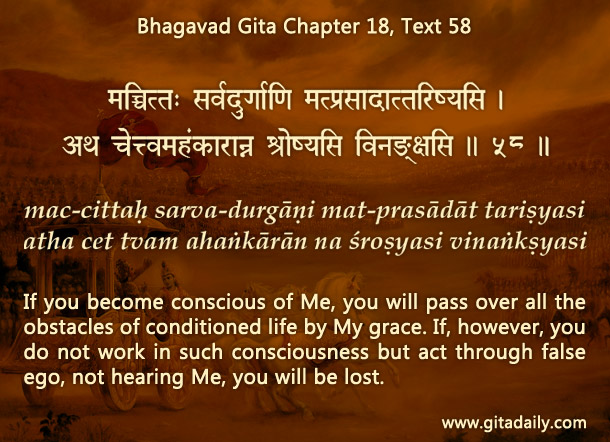
18.58 If you become conscious of Me, you will pass over all the obstacles of conditioned life by My grace. If, however, you do not work in such consciousness but act through false ego, not hearing Me, you will be lost.
Leave A Comment