
Performative activism refers to the phenomenon where a person takes up a noble cause not to genuinely make a difference, but to gain recognition and praise for appearing virtuous. Their focus is less on advancing the cause and more on showcasing themselves as good people in the eyes of the world. Such activism often stems from egoism, which can sabotage the noble intentions of the cause or distort one’s motives in joining it.
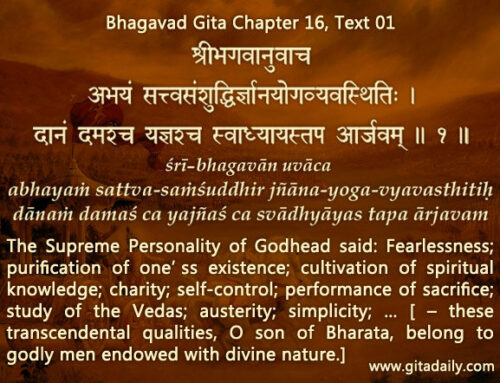
The Bhagavad Gita touches upon this in Chapter 16, where in 16.5 it highlights that even people with a demonic mentality sometimes engage in seemingly noble activities, such as giving charity. However, their primary aim is not to help the needy but to enhance their public image and enjoy the praise they receive. Their satisfaction comes more from feeling good about being recognized than from actually doing good.
When narcissism fuels activism, the focus shifts away from the cause and onto the person. While it is true that any contribution, even with mixed motives, can still help others, the larger problem arises when the cause is overshadowed by the celebration of contributors. This can lead to the instrumentalization, commercialization, and even weaponization of noble causes.
For instance, social welfare can become a lucrative endeavor for those seeking personal gain. Worse still, performative activists may use their cause to guilt-trip or shame others into silence or compliance, detracting from the cause itself. Often, such performance-centered efforts contribute little and may even harm the intended objectives.
In contrast, real activism is transformative. It prioritizes genuine impact over personal recognition. Transformative activism requires diligent, often unseen work on the ground—work done without the allure of cameras or social media applause. This selfless approach truly benefits those in need and simultaneously purifies and enriches the activist’s soul.
This evolution from performative to transformative applies not only to material causes but also to spiritual devotion. Sometimes, devotional rituals may be performed for the sake of appearing pious rather than fostering a deeper connection with the Lord. When the focus shifts to gaining applause from others, the heart becomes empty of true devotion. Transformative devotion, however, centers on pleasing the Lord, regardless of whether the service is public or private. Such devotion deepens our connection with him and fills our heart with transcendence.
The Bhagavad Gita (9.26) emphasizes that even small, humble offerings—when given with genuine devotion—are supremely pleasing to the Lord. This transformative mode of devotion helps us achieve the ultimate purpose of Bhakti: absorption in Krishna.
Summary:
- Performative activism is ego-driven, focusing on gaining recognition rather than making a meaningful impact. It can instrumentalize, commercialize, or weaponize causes, often detracting from their true purpose.
- Transformative activism emphasizes selfless service and focuses on actual on-the-ground efforts, benefiting both those in need and the activist’s inner growth.
- Devotion, too, can be practiced in a performative or transformative mode. While performative devotion empties the heart, transformative devotion deepens our connection with Krishna and fulfills the purpose of Bhakti.
Think it over:
- Recall an instance where you witnessed performative activism. Reflect on how it affected the actual cause being pursued.
- Recall an example of transformative activism and consider how it inspired you.
- Identify any devotional ritual you might be performing in a performative mode. Outline 2–3 ways to transform it into a more enriching and transformative practice.
***
16.15 [The demoniac person thinks: ] “…I am the richest man, surrounded by aristocratic relatives. There is none so powerful and happy as I am. I shall perform sacrifices, I shall give some charity, and thus I shall rejoice.” In this way, such persons are deluded by ignorance.


JAPA is the best offerings that pleases GOD