
When is such a motto keeping us grounded, and when is it keeping us in denial?
Whenever things turn out to be different from what we had expected, we tend to get agitated. And when things turn out to be drastically different from what we had expected, we tend to hyperventilate. That’s why it’s essential to stay grounded and not be swept away by the storms created in our mind due to life’s routine ups and downs.
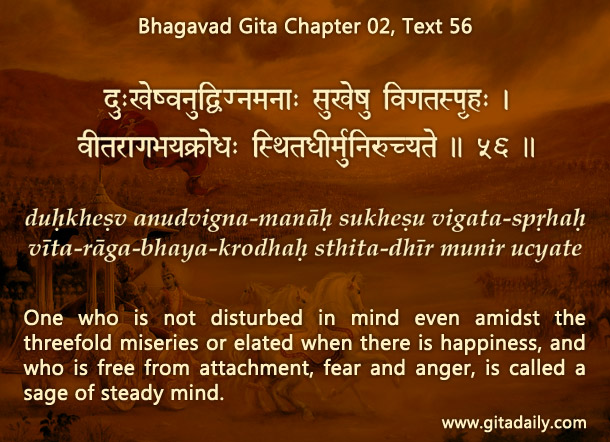
Frequently, it is our overreaction to problems that makes things far worse than the problems themselves. The Bhagavad Gita recommends as wise (2.56) those who stay steady amidst life’s dualities.
However, we need to be alert to the mind’s misrepresentation of reality. While it frequently takes small issues in the world and makes them into huge storms, it can also take huge issues, which are like major storms, and treat them as insignificant. Generally, because physical storms hit us directly, it’s difficult for the mind to minimize their gravity. However, if we are in a position of power or authority, which insulates us at least for some time from the storm’s impact, then we can live in denial.
It is to face such situations proactively and not be caught napping that we need to be alert to the mind’s tendency to downplay and minimize problems.
When we pause to contemplate the situation carefully as well as consult trustworthy and astute well-wishers, we can have a better chance of deciding what the best response to an emerging scenario may be. We will avoid being like a snowflake that can’t bear the smallest of provocations, and we can avoid being like an ostrich that keeps its head buried even in the face of impending danger.
Summary:
- The motto stay calm and carry on is beneficial for keeping us grounded when our mind exaggerates minor issues, helping us avoid impulsive overreactions.
- However, this motto can also lead to denial when our mind minimizes significant problems, delaying necessary responses and allowing issues to escalate.
- By carefully contemplating the situation and consulting expert and trustworthy well-wishers, we can effectively counter the mind’s distortions and respond constructively to life’s challenges.
Think it over:
- Reflect on a recent situation where your mind tended to overreact and how you could have responded more thoughtfully and effectively.
- Consider an instance where your mind downplayed a serious issue and think about how you could have addressed it more appropriately.
- What steps can you take to become better equipped to counter the mind’s distortions and ensure balanced decision-making?
***
02.56 One who is not disturbed in mind even amidst the threefold miseries or elated when there is happiness, and who is free from attachment, fear and anger, is called a sage of steady mind.
Leave A Comment