
Life is filled with ups and downs. These fluctuations, when seen with exaggerated importance, can turn routine events into massive dramas, escalating into emotional traumas. The more we invest emotionally in believing that life’s ups will take us to a heaven of happiness and its downs will plunge us into a hell of distress, the more we allow our minds to amplify these cycles into sources of profound turmoil.
As we age, our capacity to pursue and enjoy life’s pleasures diminishes. Our youthful fantasies and ambitions start to seem increasingly elusive and unrealistic. The pleasures that once seemed so promising begin to lose their allure. Tragically, while our appetite for pleasure wanes, our vulnerability to pain often increases. The body, weakened by age and disease, becomes more prone to suffering.
This dual shift—less capacity for joy but more susceptibility to pain—can turn life into an emotional minefield, with fewer reasons for anticipation and more causes for dread. Death looms as the ultimate nullifier of all attachments, leaving many people anxious and despondent.
However, this need not be our destiny. By cultivating wisdom, we can redirect our consciousness and aspirations toward a higher reality. This spiritual realignment grants us two invaluable gifts: spiritual commitment and material detachment.
Through spiritual commitment, we experience a higher happiness by connecting with the ultimate reality, the all-attractive and all-loving divinity, Krishna. This spiritual joy helps us become disinvested from the material world—not just from its promises of pleasure but also from its threats of trouble.
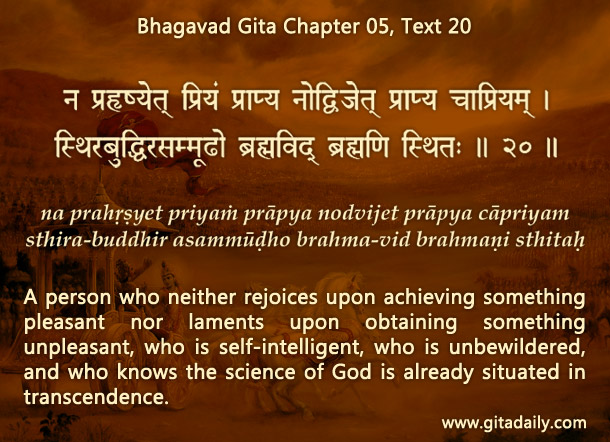
As the drama and trauma of daily life lose their grip on us, our lives do not become lifeless or mundane. Instead, they become deeply enriched by the spiritual connection and purpose we find in serving Krishna. The Bhagavad-gita (5.20) describes the consciousness of those who are spiritually anchored: they neither delight in worldly pleasures nor become dejected by worldly troubles. In the next verse (5.21), it explains how they find lasting joy in their divine absorption and connection.
Summary:
Life’s ups and downs become dramatic and traumatic when we overinvest emotionally in their significance, especially given the fleeting nature of the things we hold dear and the inevitability of death.
Aging exacerbates this dynamic as our capacity for pleasure diminishes and our vulnerability to pain increases, leading to heightened emotional turbulence.
By turning our focus from material attachments to spiritual connections, we can transcend life’s dramas and traumas, finding lasting satisfaction in loving absorption and devotional service to the divine.
Think it over:
Do you know someone who turns life’s routine ups and downs into massive dramas and traumas through excessive emotional investment?
How does the nature of life’s dualities—and our experience of them—change as we age?
How can you cultivate spiritual commitment and material detachment to rise above the tendency to dramatize life’s routine fluctuations?
***
05.20 A person who neither rejoices upon achieving something pleasant nor laments upon obtaining something unpleasant, who is self-intelligent, who is unbewildered, and who knows the science of God is already situated in transcendence.
JAPA sails you through ups and downs in life.