
To stop freaking out, stop thinking of the world as a freak show and start seeing the mind as the freak
We have all seen people overreact to something, with their exaggerated responses shifting the focus from the event itself to their reaction. It’s easy to think such individuals need better control over their emotions. Yet, upon reflection, we might realize that we ourselves often behave similarly when things don’t go as we expect—or worse, when they go completely against our preferences.
In such moments, being told to “stop freaking out” might provoke us to accuse others of trivializing the situation or failing to understand its gravity. While there are undoubtedly times when significant events demand serious concern, the reality remains that the world is inherently unpredictable and filled with challenges.
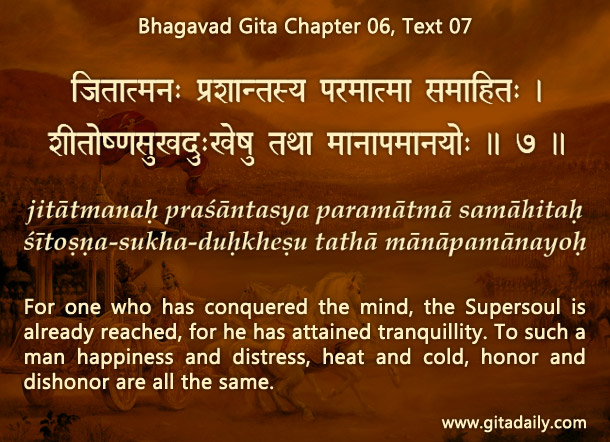
The Bhagavad Gita (8.15) describes the world as a place of distress, much of which arises from inescapable dualities—ups and downs, gains and losses, joys and sorrows. These dualities often trigger emotional turmoil, especially when circumstances swing toward the negative. However, the Gita also emphasizes the importance of maintaining steadiness amidst such fluctuations, a discipline possible for those who have trained their mind (6.7).
Rather than blaming the world for being chaotic, we might recognize that it is our mind that tends to catastrophize. The mind often amplifies minor issues, making them seem far worse than they are. By understanding this tendency of the mind, we can begin to distance ourselves from its impulsive reactions, much like a calm parent might step back from an excitable child.
Instead of veering between two extremes—blaming the world as a freak show or berating ourselves for overreacting—we can strike a balance. Acknowledge that our over-identification with the mind, and its attachment to the world’s ups and downs, fuels our emotional volatility. By practicing introspection and meditation, we can gradually detach ourselves from the mind’s impulses. Meditation, in particular, provides steadying and strengthening effects, helping us stay composed even during emotional turbulence.
As we consistently engage in such practices, our responses to life’s challenges become more measured, reasoned, and constructive. Over time, even the mind itself begins to calm, aligning with the inner steadiness cultivated through meditation.
Summary:
- It’s easier to notice others freaking out than to recognize the same in ourselves. Simply telling ourselves to stop overreacting isn’t effective, nor is blaming the world for being chaotic.
- Recognizing the mind as the real cause of our exaggerated reactions enables us to detach from it through introspection and practices like meditation.
- Meditation helps us cultivate steadiness and strength, leading to calmer, more reasoned responses to life’s ups and downs.
Think it over:
- What are the two unhealthy ways of reacting to life’s challenges, and what are the healthier alternatives?
- What are the two steps to make our reactions more measured and constructive?
- Identify a situation where you tend to overreact. How can you apply this two-step approach to handle it better?
***
06.07 For one who has conquered the mind, the Supersoul is already reached, for he has attained tranquillity. To such a man happiness and distress, heat and cold, honor and dishonor are all the same.
The human mind is unperceptible