
Even if we can’t control what we see, we can control how much we imagine about what we see.
Life constantly exposes us to objects, images, and situations that catch our attention. These external stimuli, especially in today’s media-saturated world, often trigger desires within us. However, the critical factor in whether those desires escalate into self-destructive behaviors isn’t merely the perception of these objects but how much we allow our imagination to engage with them.
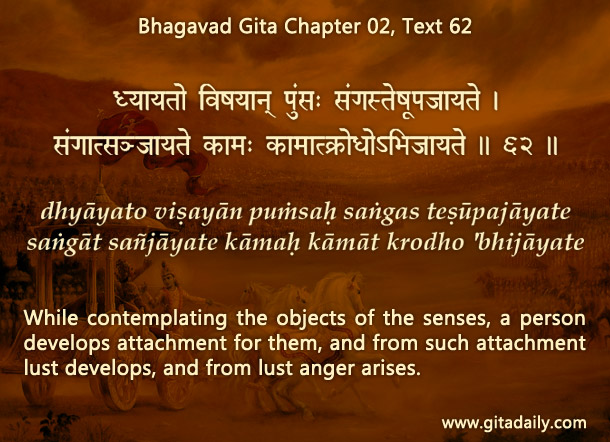
The Bhagavad Gita (2.62-63) highlights how contemplation on tempting objects leads to attachment, desire, and ultimately self-destruction. It is not the fleeting sight of such objects that pulls us down this path; it is the sustained replay of these perceptions in our imagination that ignites desire.
The Role of Imagination in Desire
- When a tempting object appears in our vision, the initial sight alone doesn’t create overpowering desire. The problem arises when:
- We allow the image of the object to linger in our mind.
- We mentally replay it repeatedly.
- We let our imagination exaggerate its allure by fantasizing about the pleasure it might offer.
This process of repeatedly visualizing and imagining enjoyment transforms a casual perception into an irresistible craving. At this stage, resisting the temptation feels like unbearable deprivation.
How to Break the Cycle
- Stop the Replay
Once a tempting object enters our vision, we need to prevent it from replaying in our mind. Without repeated visualization, it won’t gain enough traction to ignite our imagination or desire.
- Redirect the Imagination
The imagination is a powerful tool. If left idle, it tends to latch onto what is most visually or emotionally stimulating, often leading to fixation on mundane pleasures. However, if we actively engage our imagination in meaningful pursuits, we can preoccupy it, leaving little room for distractions.
For example, a student focused on graduating with honors might visualize the joy of their success and the celebration with loved ones. This vision can help them avoid distractions like excessive partying.
Similarly, someone dedicated to serving God can imagine offering the results of their service—be it a well-organized event or a beautifully decorated altar. This higher vision can fill the imagination, reducing its susceptibility to mundane temptations.
- Seek the Higher Taste
The Bhagavad Gita (2.59) teaches that experiencing a higher taste, or inner satisfaction, is the ultimate protection against falling into temptation. By investing our imagination in meaningful goals and divine service, we naturally cultivate this higher taste. The joy derived from purposeful engagement satisfies us in a way that mundane pleasures cannot.
Summary:
- The fall from perception of a tempting object to self-destruction is driven not by the sight of the object itself but by the engagement of our imagination in fantasizing about it.
- By controlling how much we let our imagination interact with tempting objects, we can prevent desire from escalating.
- When our imagination is engaged in meaningful pursuits, it becomes unavailable for mundane distractions, thereby safeguarding us from temptation.
Think it over:
- Reflect on a time when the perception of a tempting object led you down a path of indulgence. How did your imagination play a role?
- Recall a situation where the perception of a tempting object did not lead to self-destruction. What made the difference?
- Create a vivid mental picture of a worthwhile purpose that inspires you. Invest your imagination in enriching that vision, making it as real and detailed as possible to leave no space for tempting distractions.
***
02.62 While contemplating the objects of the senses, a person develops attachment for them, and from such attachment lust develops, and from lust anger arises.
Emotions creates emergencies