
It’s possible to win the support of every thinking person in a group and still be in a minority in that very group.
We live in a world that seeks to celebrate equality—even enthrone it as an unquestioned and unquestionable reality. The idea that “all people are born equal” holds some truth in emphasizing the intrinsic dignity of all individuals. However, at the material level, it clashes with reality.
Biology and genetics seem to have ignored the principles of the American Declaration of Independence. Some people are far stronger physically, while others are far smarter intellectually. Historically, physical strength often mattered most in societies where survival of the fittest was a literal reality. However, in today’s interconnected, interdependent, and complex world, intellectual fitness—marked by the ability to think and make sound decisions—matters far more than physical prowess.
Intellectual fitness and its rarity:
Intellectual fitness doesn’t necessarily require genius-level IQ, but it does demand the ability to deliberate over complex issues thoughtfully, resisting emotional biases, media propaganda, or momentary societal moods. Unfortunately, such thoughtfulness is not common. As a result, even if a thinking person presents a message that is both appealing and convincing to fellow thinkers, it may not resonate with the majority simply because most people lack the capacity or patience to think deeply about issues.
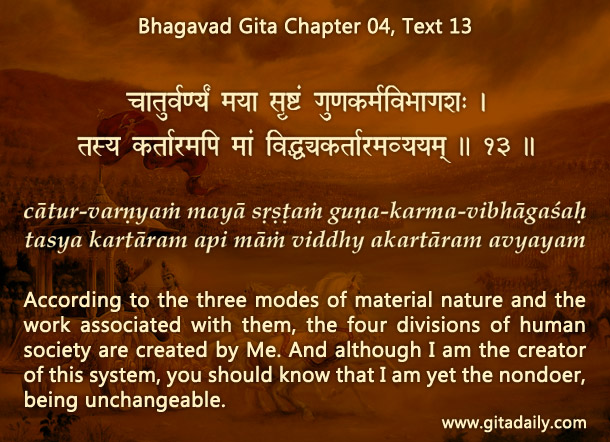
The Bhagavad Gita (4.13) explains that society comprises four classes of people, each with its distinctive and invaluable skill set. The capacity to think deeply is a defining skill of one class, but this group is almost always a tiny minority.
Two options for thinkers:
Faced with this reality, thinking individuals have two options:
- Condemn the rest of humanity for not being as thoughtful as they are.
- Connect with those among the second class of people who are resourceful, charismatic, and have leadership qualities to influence the masses.
When intellectual thinkers and effective leaders join hands, society can be constructively and tangibly transformed.
Summary:
- Thinking is hard work, and the capacity to think deeply is not equally distributed among all humans.
- Most people make decisions based on emotion, bias, societal mood, or media propaganda, rather than careful deliberation.
- A thinking person might gain the support of other thoughtful individuals but still remain in the minority on substantial issues.
- Instead of blaming others for being unthoughtful, thinkers need to collaborate with leaders who can communicate effectively with the masses and help implement measures for societal change.
Think it over:
- Why do thinking people often lack influence?
- When dealing with that lack of influence, what are the unhealthy and healthy choices for such people?
- How can you increase your influence based on your situation and disposition?
***
04.13 According to the three modes of material nature and the work associated with them, the four divisions of human society are created by Me. And although I am the creator of this system, you should know that I am yet the nondoer, being unchangeable.
GOD does not bother about thinkers