
An angry mind, driven by vengefulness, can exhibit extraordinary energy, but such vengefulness cannibalizes the very mind that conceives it.
We are naturally attracted to energetic people. Lethargic people rarely inspire us; they may even irritate us when we depend on them. And we often wish we had more energy ourselves, especially motivational energy.
Yet we need to look beyond how much energy someone has to the source of that energy and its effects.
Anger is a powerful emotion, and vengefulness gives that emotion a specific target, making it even more powerful. But such energy can consume not just our attention and time, but also our values and character.
Our mind is not merely a generator of emotional energy; it is also an impressionable receptacle for emotional impressions. The hatred we cultivate toward one person can become a habitual response toward others. Small offenses start seeming like justifications for vengefulness. In hating someone, we may ourselves become hateful.
Thus, vengefulness, conceived by the mind, eventually cannibalizes the mind itself. The Bhagavad-gita (16.21) therefore cautions that anger is one of the gates to hell.
Before admiring someone’s energy, consider not just its intensity, but also its source and its effects.
Behind the Quote | Bhagavad-gītā 16.21
Anger can generate extraordinary energy. When anger hardens into hatred and develops into vengefulness, that energy can sustain a person’s pursuit of revenge for years. But at what cost? Bhagavad-gītā 16.21 describes anger as one of the three gates to hell, leading to the destruction of the self. While this can refer to suffering beyond this life, it can also illuminate the hellish condition anger creates within us here and now. Vengefulness may energize the mind externally while devastating it internally, distorting its perceptions, priorities, and personality. To convey this disturbing reversal, I chose the word cannibalizes: the mind conceives vengefulness, nurtures it, and eventually becomes consumed by its own creation.
The Bhagavad-gītā (16.21) describes anger (krodha) as a gate to hell (narakasya dvāram) that destroys the self (nāśanam ātmanaḥ). This hell can refer to a destination after death, but it can also refer to the hellish condition anger creates within us. Indeed, the destruction of the self cannot be literal, because the soul is indestructible; it refers to the destruction of our spiritual awareness and inclination.
How does anger create such an inner hell? Initially, anger can seem empowering, filling us with energy and a sense of control. But when anger hardens into hatred and drives us toward vengeance, it progressively distorts our perceptions, priorities, and personality. The mind that conceived and nurtured anger becomes so transformed by it as to be almost unrecognizable. Just as a cannibal might devour the very person who nurtured them, vengefulness devours the very mind that conceived it. That is why the quote uses the provocative word cannibalizes.
***
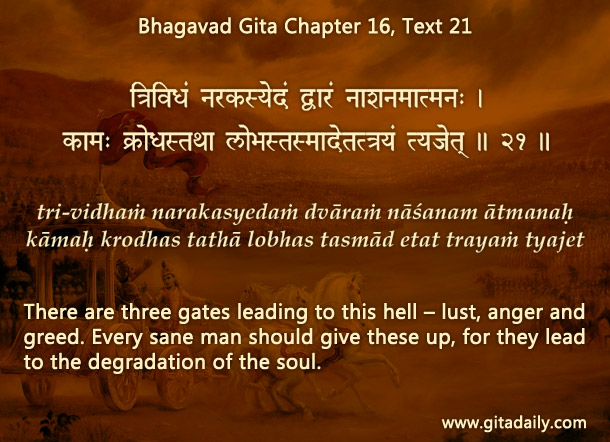
16.21 There are three gates leading to this hell – lust, anger and greed. Every sane man should give these up, for they lead to the degradation of the soul.
Leave A Comment