
Love naturally makes us protective. But when one relationship becomes so important that every other relationship becomes expendable, love can become destructive.
Dhritarashtra’s love for Duryodhana illustrates this danger dramatically. His concern for his son gradually blinded him first to his responsibility toward his nephews, the Pandavas, and eventually toward his entire kingdom. By repeatedly allowing Duryodhana’s interests to override every competing concern, he permitted events to move toward a devastating fratricidal war.
We may never go to Dhritarashtra’s extreme, nor may our actions—or inaction—have such severe consequences. Yet the same tendency can appear subtly within ordinary families. Parents may become so invested in one especially gifted child that, without intending to, they give their other children less attention. The TV series Young Sheldon portrays something of this dynamic: Mary’s understandable concern for her exceptionally gifted son Sheldon sometimes leaves his siblings, especially Missy, feeling overlooked. The parents may believe that the extraordinary child simply needs extraordinary attention, yet the other children can still be hurt by what they experience as neglect.
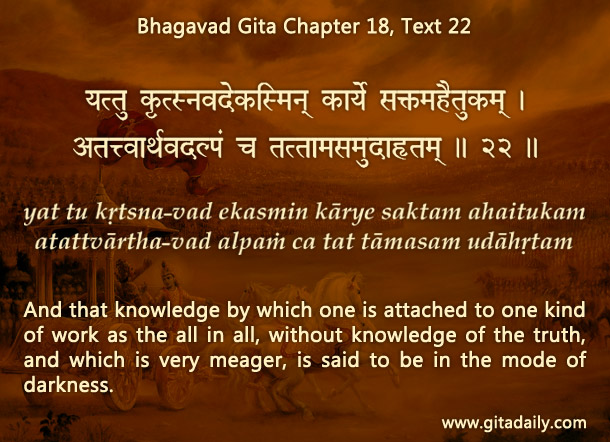
The Bhagavad-gita (18.22) describes knowledge in ignorance as taking one fragment of reality to be everything. Love can become similarly distorted when one person becomes everything and everyone else becomes insignificant. Healthy love expands our capacity to care; unhealthy attachment can contract it.
SUMMARY:
When protecting someone we love becomes our permission to harm everyone else, our love becomes toxic.
***
18.22 And that knowledge by which one is attached to one kind of work as the all in all, without knowledge of the truth, and which is very meager, is said to be in the mode of darkness.
Leave A Comment