
From a purely biological perspective, human beings are often identified simply as biological machines. Biology suggests that survival and reproduction are the primary drivers of life, meaning we are essentially programmed for eating, sleeping, mating, and defending. However, there are defining human characteristics that cannot be explained if we are merely biological survival machines.
The Bhagavad Gita teaches that the soul is characterized by sat (eternal existence), chit (consciousness/knowledge), and ananda (joy). These three qualities subtly but undeniably drive our behavior in ways that defy biological logic.
First, we desire to live forever. Nothing in nature survives forever—everything, even the Himalayas, is subject to decay. Yet, humans possess a deep longing for eternal existence. This longing points to our spiritual core. It is as inexplicable as a child in a remote, isolated village suddenly expressing a desperate desire to see the Leaning Tower of Pisa. Such an innate curiosity suggests an origin beyond immediate physical experience.
Second, we possess an insatiable curiosity for knowledge. We are curious not just for survival, but for the sake of knowing itself. The curiosity that drove Isaac Newton to understand gravity, or that drives humanity to create art, literature, and philosophy, transcends basic biological needs.
Third, we desperately seek joy. While pleasure is natural, the human pursuit of joy often directly contradicts our biological mandate to survive. If we were just biological creatures, our search for pleasure would never get in the way of our survival. Yet humans frequently engage in self-destructive behaviors, such as substance addiction, in a desperate search for joy. This longing for a profound, lasting happiness is not experienced by animals in the same way, pointing once again to the non-physical, spiritual nature of our existence.
***
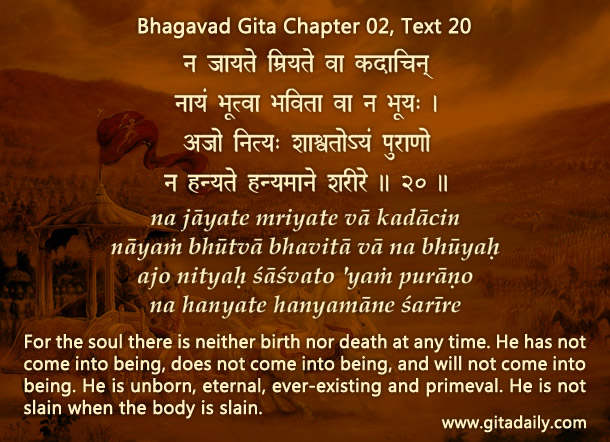
02.20 For the soul there is neither birth nor death at any time. He has not come into being, does not come into being, and will not come into being. He is unborn, eternal, ever-existing and primeval. He is not slain when the body is slain.
Leave A Comment